Bank of America
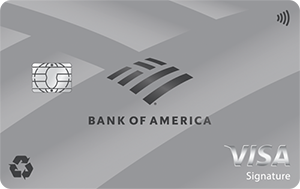
Bank of America Unlimited Cash Rewards Credit Card for Students
Student credit card with unlimited 1.5% cash back, $250 welcome bonus, and no annual fee. Includes 0% intro APR for 15 billing cycles.
Annual fee
None
Top rate
1.5x everything else
Credit needed
No credit history needed
Quick look
Unlimited 1.5% Cash Back
Earn on every purchase with no annual fee
4.0
out of 5
Rewards
Fees
Welcome bonus
Perks
Value
Overall score is a weighted average: Rewards 20% · Fees 20% · Welcome bonus 20% · Perks 20% · Value 20%.
Ideal for
Students who prefer straightforward cash back over bonus categories and want no annual fee with an intro APR safety net.
The verdict
This is a solid entry point for students who want simplicity over category optimization. Unlimited 1.5% cash back on everything — no hunting for bonus categories, no maximums to hit — paired with no annual fee and a 15-month intro APR period makes it a genuine earner from day one. The $250 welcome bonus is modest but real.
That said, it's not the best cash-back card for students in the catalog. Capital One's Savor card punches harder with 3% on dining and entertainment, higher ratings, and nearly identical terms. If you're the type to actually track category bonuses, Savor or Discover's Student card will put more cash in your pocket. This BofA card wins on simplicity and the intro APR — valuable for a first cardholder who might carry a balance while building habits.
Pros
- Unlimited 1.5% cash back on all purchases with no caps or categories to track
- 0% intro APR for 15 billing cycles on purchases and balance transfers made within 60 days
- $0 annual fee and no minimum credit history required for student applicants
- Bank of America Preferred Rewards can boost earnings up to 75% more cash back
Cons
- Regular APR of 17.49%-27.49% is on the higher end once intro period ends
- 1.5% base rate ranks 28th in catalog — Capital One Savor and Discover it offer higher category bonuses
- 3% intro balance transfer fee drops to 5% after first 60 days
- Foreign transaction fee status unclear, limiting use for study abroad
Reward rates
| Category | Rate | Details |
|---|---|---|
| Everything else | 1.5x | Earn unlimited 1.5% cash back on all purchases |
The 1.5% flat rate is 30% above average for no-fee cards and requires no category tracking. Bank of America Preferred Rewards members see an additional 25%-75% boost depending on tier. Because the rate is fixed across all purchases, even rotating categories like Discover it Student or maximizing dining on Savor will generate more for heavy category spenders — but if you prefer simplicity, this rate consistently outpaces the average card.
Fees and APR
Does it pay for itself?
Zero annual fee makes this genuinely free to keep open. Combined with no minimum income, no credit history requirement for student applicants, and the 15-month intro APR, there's no hidden cost for trial or switching.
Welcome bonus
Is it worth chasing?
$250 is attainable — you need $1,000 spend across 3 months, roughly $330/month, well within typical student spending. It arrives as a credit to your account, not points, so it's impossible to devalue. Not lavish compared to premium cards' 5-figure bonuses, but legitimate for a no-fee entry card.
Other benefits
- 0% intro APR for 15 billing cycles on purchases and balance transfers made within 60 days
- 3% intro balance transfer fee for first 60 days, then 5% after
- Access to Better Money Habits educational tools
- Award-winning Mobile Banking and Online Banking access
- Account alerts via email or text for balance and due date notifications
- Digital Wallet support for Apple Pay, Google Pay, and Samsung Pay
- Balance Connect for optional overdraft protection with no transfer fees
- Paperless statement option
- $0 Liability Guarantee for fraudulent transactions
Similar cards
Higher category bonuses (3% dining, 2% groceries/gas) if you want to optimize by category
Rotating 5% categories and automatic first-year cash back match for budget optimizers
Frequently asked questions
Does Bank of America Preferred Rewards really boost my cash back?
Yes, but only if you maintain a qualifying balance or direct deposit with BofA. Tiers range from 25% bonus (with $20k+ balance) to 75% (with $100k+ or qualifying income). If you're banking there already, it's free upside. Without Preferred Rewards, you earn flat 1.5%.
Is this better than the Capital One Savor card for students?
Depends on your spending. Savor's 3% on dining and entertainment beats BofA's flat 1.5% in those categories, and it scores higher overall (4.8 vs 4.0). BofA wins if you want zero category math. Both have no annual fee and intro APR.
What happens to my APR after the 15-month intro period?
You'll pay 17.49%-27.49% depending on creditworthiness and market conditions. That's the standard student-card range. Plan to pay off recurring balances before month 15 if you're carrying revolving debt.
Can I use this card abroad or for international purchases?
The card supports digital wallets (Apple Pay, Google Pay, Samsung Pay) for easier contactless payments overseas. However, Bank of America has not published a foreign transaction fee for this card — contact them directly before traveling to confirm the exact rate, if any.
How much do I need to earn to qualify?
As a student card, income is not a typical requirement — focus is on credit history or creditworthiness. You need to be a current student and have no credit history needed or fair credit (580+) depending on your profile. Check BofA's site for current student eligibility.
Reviewed by YoungerFinance Editorial · Last updated August 10, 2026