Chase
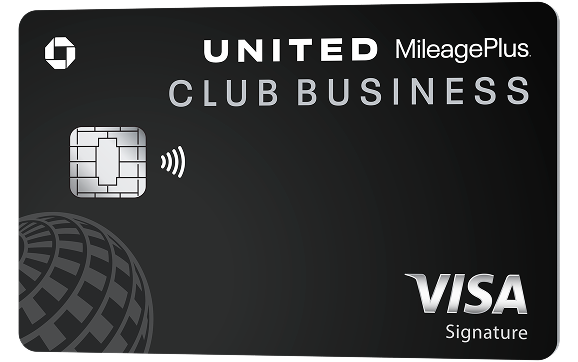
United Club Business Card
Earn up to 110,000 bonus miles with United Club membership, Premier Access travel services, and over $925 in annual partner credits. Premium business travel card with 8x miles on flights.
Annual fee
$695
Top rate
8x flights
Welcome bonus
$1,650
Quick look
United Club Access & Premium Rewards
Unlimited United Club lounge access, 8x miles on flights, Premier services
4.0
out of 5
Rewards
Fees
Welcome bonus
Perks
Value
Overall score is a weighted average: Rewards 20% · Fees 20% · Welcome bonus 20% · Perks 20% · Value 20%.
Ideal for
Frequent United business travelers who visit United Club lounges regularly and can leverage the annual hotel, rideshare, and JSX credits.
The verdict
The United Club Business Card stands out for serious United flyers with business travel budgets. The $695 annual fee stings, but bundled lounge membership (worth ~$750 alone), free checked bags, and $650+ in annual credits meaningfully reduce net cost. The 8x earning on eligible United flights is genuinely strong—3rd-best in the catalog. The catch: those credits only work in specific buckets (JSX flights, select hotel providers, rideshare up to a cap), and rewards outside United are merely competent. The card pays for itself if you visit a United Club lounge at least monthly and actually use the hotel and rideshare credits. For occasional flyers or those wanting flexible rewards, the less expensive United Business Card or a broad-based card like Sapphire Reserve is the smarter play.
This is a card for a specific person: the business owner who spends six figures annually with United, values lounge time on layovers, and can funnel a meaningful portion of their travel spend into the card's credit categories. Everyone else will watch the annual fee slowly drain value.
Pros
- Unlimited United Club lounge access included—a benefit worth $750+ per year on its own, with guest privileges.
- 8x miles on eligible United flights ranks 3rd in the catalog, behind only the Quest (10x) and Explorer (9x).
- Annual credits for hotels, rideshare, JSX flights, and rental cars add $650+ in value if you travel frequently.
- Free checked bags and priority services for cardholder and one companion on United flights.
Cons
- The $695 annual fee assumes you actually redeem those credits—flexibility is limited compared to cash-back cards.
- Earning rates outside the United ecosystem (1.5x on general purchases) trail competitors like the Sapphire Reserve (2x) or Capital One Venture X (2x).
- Hotel earning (5x through Renowned Hotels) ranks 15th in the catalog, far behind specialists like IHG Premier (26x).
- Annual fee increased 55% in March 2025 (from $450 to $695), putting pressure on the return equation.
Reward rates
| Category | Rate | Details |
|---|---|---|
| Flights | 8x | 8x total miles on eligible United flights (6x from MileagePlus + 2x from card) |
| Hotels & car rentals | 5x | 5x miles on hotel stays through Renowned Hotels and Resorts |
| Everything else | 2x | 2x miles on all other eligible United purchases |
| Everything else | 1.5x | 1.5x miles on all other purchases |
The 8x on eligible United flights is genuinely strong, but the term "eligible" matters—basic economy fares often don't qualify. The 1.5x on general spending lags dedicated travel cards. Where this card wins is the combination: lounge access (for working between flights or finding peace) + elite boarding + free bags + checked-bag priority. For a United devotee, these earnings compound the airline relationship. For a generalist, the narrow earning window is a drawback.
Fees and APR
Does it pay for itself?
At $695, this card is pricey. But the included United Club membership alone costs at least $750 to buy standalone. Add the annual credits—$150 rideshare, $200 hotels, $100 rental cars, $200 JSX purchases—and you're looking at $650+ in tangible value. That means a "net fee" as low as $45 if you use those credits fully. Realistically, most cardholders will capture 70-80% of available credits, bringing net cost to $150-$200 annually. Still meaningful, but not outrageous for a premium business card. However, those credits are rigid: hotel credits only work at participating luxury chains, JSX is regional, rideshare caps at $12/month. If you don't travel or fly JSX-served routes, those credits evaporate.
Welcome bonus
Is it worth chasing?
110,000 miles is a solid welcome offer by airline-card standards, worth roughly $1,100–$1,650 depending on redemption. The $5,000 minimum spend in 3 months is achievable for a business card (average $1,667/month). The bonus also includes 2,000 Premier qualifying miles (PQP), which count toward MileagePlus Premier status—useful if you're chasing elite benefits. Add employee cards and an extra 10,000 miles, and a couple of cardholders could quickly unlock lounge access tiers. This bonus is competitive against other premium co-branded cards, though not record-breaking.
Similar cards
Half the annual fee ($150 vs. $695), same 110K welcome offer, weaker lounge/credit perks—pick this if you fly United but don't care about Club access.
$795 annual fee, more flexible 3x earning on travel+dining, broader category bonuses—choose this if you want business travel rewards beyond United.
Frequently asked questions
Is the United Club Business Card worth the $695 annual fee?
Only if you meet two conditions: you fly United at least 6 times per year (enough to use the lounge monthly and justify checked-bag savings) and you can funnel hotel bookings, rideshare, and JSX flights through the card. For those users, the included lounge membership and $650+ in credits offset much of the fee. For occasional United flyers or those without JSX access, the less expensive United Business Card is a better fit.
What's the difference between this card and the regular United Business Card?
The regular United Business Card ($150/year) offers the same 110K welcome bonus and rewards on flights, but you lose unlimited Club lounge access, free checked bags, and the annual statement credits. The premium card is for frequent United loyalists; the standard card is for those who occasionally fly United but don't need lounge access.
Can I use the hotel credits at any hotel?
No. The $200 annual hotel credit works only through Renowned Hotels and Resorts, a select collection of luxury properties. If you typically book Best Western or mid-range chains, those credits won't apply. Check the Renowned portfolio before applying.
Do the annual credits apply automatically, or do I need to enroll?
You typically need to activate or register for some credits (like the hotel credit or Global Entry reimbursement) through your Chase account portal. Rideshare and JSX credits usually post automatically when you charge those merchants to the card. Review the cardholder agreement for enrollment requirements.
What's the credit score requirement for this card?
Chase typically requires Good to Excellent credit (FICO score 670 or above), though business credit is also evaluated. You'll also need to show business income or viability—a sole proprietorship with minimal revenue may be denied. Apply through Chase's business portal and be ready to provide basic business tax returns or financial statements.
Reviewed by YoungerFinance Editorial · Last updated August 11, 2026