Chase
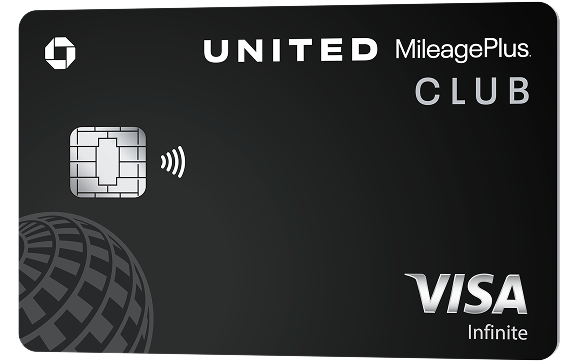
United Club Infinite Card
Premium United co-branded card with annual Club passes, strong rewards on travel and dining, and elite perks for frequent flyers.
Annual fee
$695
Top rate
2x dining & restaurants
Welcome bonus
$1,200
Quick look
2 Annual Club Passes
Annual United Club passes for premium airport lounge access
3.3
out of 5
Rewards
Fees
Welcome bonus
Perks
Value
Overall score is a weighted average: Rewards 20% · Fees 20% · Welcome bonus 20% · Perks 20% · Value 20%.
Ideal for
Frequent United flyers (8+ trips annually) who value unlimited lounge access and view the Club membership as a core travel utility.
The verdict
The United Club Infinite Card is a specialized premium card built for one very specific traveler: the frequent United flyer who values unlimited lounge access above all else. The $695 annual fee is steep, and the earning rates (2x on dining and United-booked flights, 1x elsewhere) rank outside the top 30 for every spending category—you're not getting this card for spending rewards. You're getting it for the two annual Club passes, which ordinarily cost $750/year. If that lounge access figures heavily into your travel, the card makes economic sense. If you're a casual United flyer or need multi-airline lounge access, skip it.
The welcome bonus (80,000 miles for $5,000 spend in three months) is solid but not exceptional. The real question: does everything outside the lounge justify $695? For frequent United loyalists who take eight or more United trips per year, probably yes. For everyone else, lower-fee United cards handle the earning while keeping your costs down.
Pros
- 2 Annual United Club passes with unlimited domestic lounge access (retail value ~$750/year).
- 80,000 bonus miles covers a round-trip domestic flight for new cardmembers.
- Focused on frequent United travelers; simple value proposition (lounge access).
Cons
- Earning rates (2x/2x/1x) rank outside the top 30 for all spending categories.
- $695 annual fee requires consistent lounge use to justify the cost.
- Limited earning diversity—only dining and United flights earn bonus miles.
- Weak value for occasional United travelers or those seeking multi-airline lounge access.
Reward rates
| Category | Rate | Details |
|---|---|---|
| Dining & restaurants | 2x | 2x miles on dining restaurants |
| Flights | 2x | 2x miles on flights booked through United |
| Everything else | 1x | 1x mile on all other purchases |
The card earns 2x miles on dining and flights booked through United.com, plus 1x on everything else. Dining ranks 32nd out of 57 cards that bonus the category; flights rank 40th out of 48. For a $695-fee premium card, this is mid-pack to below-average earning power. If your travel strategy centers on maximizing spending rewards, this card doesn't compete with cards like Sapphire Reserve (3x dining/travel) or Citi Strata Elite (6x dining). The real value lies in the Club pass, not the earning rates.
Fees and APR
Does it pay for itself?
At $695, this card pays for itself if you would otherwise purchase a United Club membership (standalone cost ~$750/year). The economics work only if you consistently use the lounge—fewer than four lounges visits per year means you're overpaying for the benefit. Compare this fee to its peer band ($347–$1,216): Delta Reserve ($650), Marriott Brilliant ($650), Citi Strata Elite ($595). All premium products bundling significant perks. Without the Club pass benefit, the earning rates alone don't justify the cost.
Welcome bonus
Is it worth chasing?
80,000 miles for $5,000 spend in three months is a solid welcome offer—roughly one round-trip domestic award flight. It's not the largest bonus in the premium card space (some competitors offer 100,000+ miles), but it's respectable. The real question: can you hit the $5,000 spend naturally within three months? If so, bonus miles are gravy on top of normal spending.
Similar cards
Lower $350 fee with broader earning rates—a solid alternative if you want United rewards and status without committing to lounge access.
Comparable $795 premium tier, but with flexible 3x earning on dining/travel and transfer partners across multiple airlines instead of single-airline focus.
Frequently asked questions
Is the $695 annual fee worth it if I don't use the lounge much?
No. The Club membership justifies the fee only if it's central to your travel routine. Fewer than 4–6 lounge visits per year means you're paying $100–150 per visit, which is expensive. If lounge access is 'nice to have' rather than 'essential,' the fee is hard to justify when earning rates rank outside the top 30 for all categories.
What does '2x miles on United-booked flights' mean?
You earn 2x miles only when you purchase a United flight directly through United.com or United's reservation system. Flights booked through third-party sites (Kayak, Expedia, Google Flights) won't qualify for the bonus, even if they're United operated. This is common on airline co-branded cards and limits your booking flexibility.
Can I use the 2 annual Club passes for guests or family members?
Yes—the two annual Club passes are separate memberships you can assign to another household member or frequent traveling companion. This is distinct from guest access: you can always bring one guest into the lounge, or you can give the annual passes to people who need their own access. The passes provide unlimited individual access when used by their assigned member.
How does this card compare to United Quest or United Explorer?
Quest ($350 fee) and Explorer ($150 fee) offer higher earning rates on United purchases and flights. If you want United rewards without committing to lounge access, either is a better fit. The Club Infinite's entire value proposition is the included Club membership. Remove that from the equation, and the earning rates don't compete.
What happens if I cancel the card mid-year?
Credit card issuers typically don't prorate annual fees, so canceling mid-year means you forfeit the full $695 charge. Some cards offer benefits timed to offset early-year fees (credits, bonuses), but check your card's terms. If you're uncertain about using the lounge enough to justify the fee, apply cautiously.
Reviewed by YoungerFinance Editorial · Last updated August 11, 2026